Archive for the 'Kigoma Quality Improvement' Category

Mar 23 2010

Kanyovu Cooperative Wins 2010 Taste of Harvest

This past year, Sustainable Harvest quality expert Stephen Vick and two Tanzanian cuppers he trained, Serafina Gerald Mathias and Shabani Mahwisa, cupped and tracked more than 800 distinct samples of coffee from the Kanyovu cooperative to help farmers maximize the direct sale of their best beans. After so many cuppings, Serafina and Shabini knew the particular coffee they wanted to enter into the 2010 African Taste of Harvest competition: an outstanding cup from the Mkabogo washing station.

Stephen describes the Mkabogo coffee and the final round of the Taste of Harvest competition, which took place at the annual EAFCA conference in February:

Coffee from the Mkabogo washing station, part of eastern Tanzania's Kanyovu Coffee Cooperative, recently won the 2010 Taste of Harvest competition

Coffee from the Mkabogo washing station, part of eastern Tanzania's Kanyovu Coffee Cooperative, recently won the 2010 Taste of Harvest competition

When I began roasting the day lots for the Kanyovu washing stations last summer, I knew there was something special about the Mkabogo coffee, not only in the way it cupped, but also in the way that it developed in the roaster. Just a couple weeks into roasting and cupping the early harvest lots, I could determine if the batch I was roasting was from the Mkabogo washing station as soon as it started cracking. The finished sample stood out visually on the table, and the cup profiles I was tasting last summer were incredible: bright acidity with flavors of rose hip, fresh fig, and apricot balanced out with a beautiful sugar cane sweetness.

Needless to say, I had high hopes for Mkabogo’s performance in the Taste of Harvest. It had already won the in-country competition back in December, and I was mainly worried about competition from East African powerhouses Kenya and Ethiopia.

Then came the closing dinner of the EAFCA conference, where they announced the 2010 Taste of Harvest international winners. This took place at Fort Jesus, a large fort on Mombasa Island, built in 1593 by the joint Portuguese and Spanish Kingdom. Craig Holt from Atlas Coffee Importers organized this Taste of Harvest competition, and began the announcement by introducing the esteemed jury. Then, Craig announced the winners of each position—5th place in-country winners competed with the other 5th place finishers, 4th place with the other 4th placers, and so on. My concerns were growing as Kenyan coffees were won 5th place, 3rd place, and 2nd place winners. Finally, Craig announced the overall winner for the 2010 EAFCA Taste of Harvest: “Kanyovu AA -Kigoma, Tanzania!”

I shrieked with excitement and high-fived the Sustainable Harvest team, as Sara called Gena back in Tanzania so that she could inform the Kanyovu cooperative.

-Stephen

  • Share/Bookmark

No responses yet

Jan 15 2010

Coffee Quality: Training the Trainers

photo-21

Left to right: Shabani, Sarafina, and staff members Thangale and Boss conduct a coffee quality cupping at the Sustainable Harvest at Origin offices in Kigoma, Tanzania.

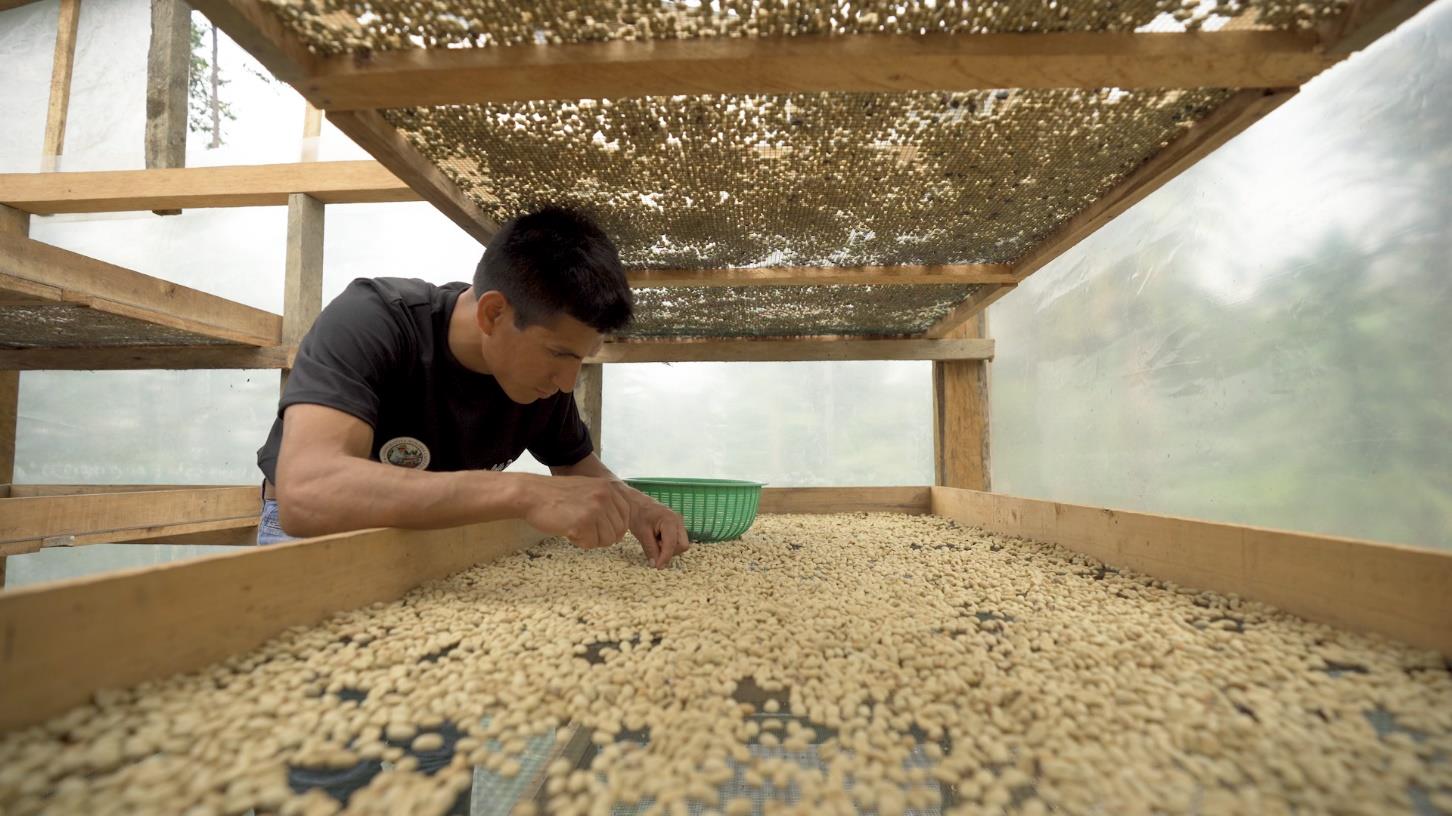
During the 2009 harvest in Tanzania, Shabani and Sarafina began learning how to cup coffee at the Sustainable Harvest office in Kigoma. After a post-harvest break, they returned to the Sustainable Harvest office this week to participate in the first coffee quality cuppings of the year. They will continue their training and further hone their skills in preparation for the harvest that will begin in late May. Their return to the cupping lab was evidence of the value they see in their ongoing education. For Sustainable Harvest, it’s also important: as we select and train women and men like Sarafina and Shabani in assessing coffee quality, it’s critical that they return year after year, harvest after harvest. That’s how the Kigoma region will continue to build its human capacity in the coffee industry. As Shabani and Sarafina refine their skills, they can begin to share their skills and train others in their community.

Sustainable Harvest supports cupping and quality control trainings in Africa and Latin America to help growers improve the quality of their coffee and earn higher prices. But how do we ensure that the instructors themselves have the best possible education in how to train others?

Adam McClellan, a relationship coffee manager at Sustainable Harvest, recently spent three days in Long Beach, California attending a Coffee Quality Institute Q instructor training course. Adam is already a Licensed Q Grader, graduate of one of the most rigorous quality evaluation programs in the industry, and is now learning how to teach others to become Q Graders.

Adam explains the process: “Over three very long days we covered adult teaching techniques, protocols for administering exams, new variations to the tests, reporting procedures, strategies for dealing with a lack of infrastructure in certain origins and the program for certifying coffee lots as ‘Q’ (lots that are graded by three different ‘neutral’ Q graders and score an average of more than 80 points)… and this is just one of the stages that must be completed before becoming a fully certified instructor.”

By providing our own staff with training on how to better instruct others, we can provide farmers and co-op members with the best possible education in coffee quality. And when local partners like Sarafina and Shabani receive training in methods that can improve their livelihoods and self-sufficiency, it gives them a reason to return again and again for the next step in their education.

  • Share/Bookmark

No responses yet

Nov 18 2009

Tanzanian Farmers Reap Rewards for Quality Coffee Picking

On a recent Friday morning, Sustainable Harvest staff at origin gathered at the Nyarubanda primary school in Kigoma, Tanzania. They had planned to meet there with Kanyovu cooperative’s most dedicated specialty coffee farmers to celebrate their achievements during the harvest, but the first rains of the season were falling throughout the countryside turning the road into mud. Staff members worried that the farmers might not be able to get there.

To the staff’s relief, attendance at the event was almost perfect. Co-op members from far and wide had overcome the drizzly conditions to arrive at the Nyarubanda primary school. The turnout was fueled by curiosity: Kanyovu’s members wanted to know who had won Sustainable Harvest’s first-ever Cherry Picking Competition.

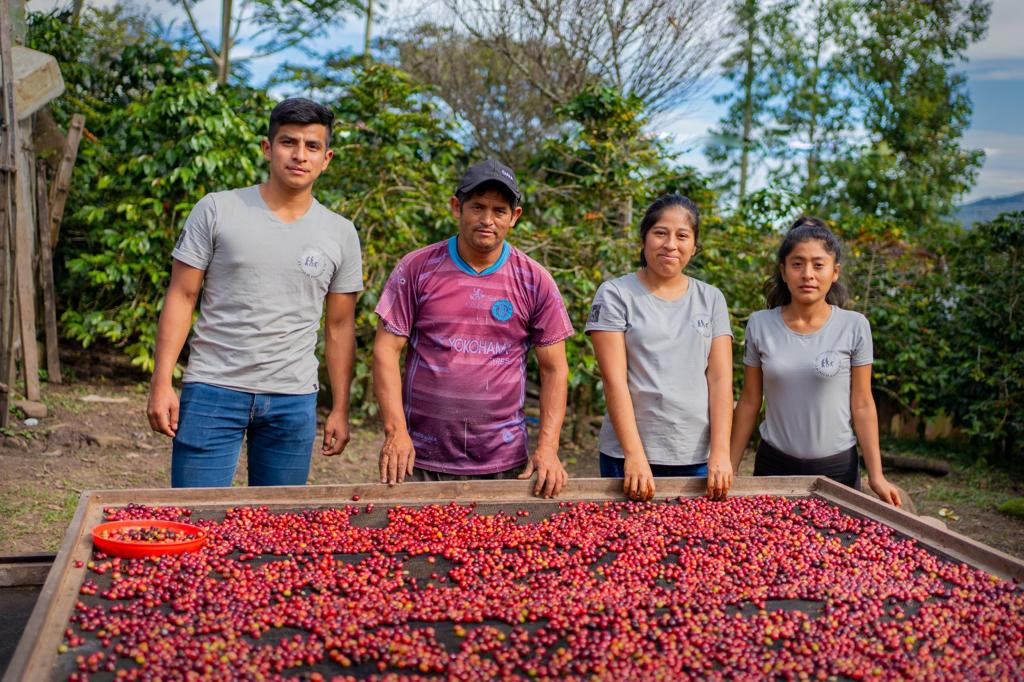
Selecting the best coffee cherries is critical in producing high quality coffee.

Selecting the best coffee cherries is critical in producing high quality coffee.

The competition emphasized the importance of picking and sorting coffee cherries to produce high-quality coffee. When coffee cherries are harvested with care and diligence, quality improves dramatically and the coffee can fetch a higher price. Through activities like the Cherry Picking Competition, Kigoma farmers are learning that coffee quality depends on their actions as soon as the cherries come off the tree. For the competition, farmers weighed their load both before and after sorting out unsuitable cherries at the washing stations. Washing station managers calculated each farmer’s average weight loss due to sorting over the whole harvest. Then the three top pickers (those with the least weight loss) at each washing station were invited to the celebration at Nyarubanda as the winners of the competition.

When Sustainable Harvest first began working in with the Kanyovu Cooperative in 2006, Kigoma was not well known as a coffee-producing region of Tanzania. Just three years later, the cooperative is a model for coffee quality improvement in East Africa. Much of this success can be attributed to farmers’ careful attention to detail when picking and processing their cherries, skills that Sustainable Harvest’s agronomists emphasize when training co-op members.

Recent news from Tanzania has confirmed the impact on quality that Kanyovu members’ expert picking skills have brought — last Friday, Kanyovu cooperative coffee was voted first place in the East African Fine Coffee Association’s (EAFCA) Taste of the Harvest competition. During its annual event, EAFCA brings an international panel of judges to Tanzania to taste the current crop of coffees and rank them by quality. This year, Kanyovu’s beans scored an average of 85.4 and judges described the coffee as fruity with good acidity and a clean finish.

Competition winners from the Mkabogo washing stationed received certificates noting their achievement.

Competition winners from the Mkabogo washing stationed received certificates noting their achievement.

The delicious cup judged at Taste of the Harvest came from a washing station in Mkabogo village, where approximately 175 farmers process their coffee. Three of those farmers came to Nyarubanda that rainy Friday morning, to be honored for their excellent attention to quality during the harvest.

The winners of the Cherry Picking Competition did not go home empty-handed. Third place pickers won clippers, second place won safety equipment for application of fertilizers, andirst place won a cash prize. In addition, every winner went home with a certificate describing their achievement.  As the Kanyovu Chairman Mahwisa so eloquently said, one day the farmers’ prize money will be spent and winners will be left with nothing in their pockets. But a certificate will hang in their home forever, so that everyone who comes by can see what he has accomplished and understand his contribution to improving coffee and the good of the nation.

  • Share/Bookmark

No responses yet

Sep 09 2009

Sustainable Harvest Connects with South African Coffee Roasters

South Afican Coffee roasters were intrigued by Sustainable Harvest's Relationship Coffee Model

South Afican Coffee roasters were intrigued by Sustainable Harvest's Relationship Coffee Model. In the past few years, South Africa has shown an increasing demand for specialty coffee.

Last week, Sustainable Harvest staff at origin in Tanzania traveled to South Africa to meet with representatives from South African coffee roasters and introduce them to the high quality coffee grown in the Kigoma region by the members of the Kanyovu Coop in Northwestern Tanzania. South Africa has shown an emerging demand for specialty coffee, and is therefore regarded as a potential market for the high quality coffees of Kanyovu Coop. Sevenoaks, a leading South African Coffee importer and Sustainable Harvest’s customer, played a crucial role in staging the trip, introducing Sustainable Harvest to its network of roaster customers and organizing the well- coordinated events.

Sustainable Harvest’s Stephen Vick and Marc Schonland arrived in Johannesburg and Cape Town with a mission: To explain to groups of roasters Sustainable Harvest’s business model and its unique collaborative relationship with the Kanyovu Coffee Cooperative in Tanzania. Stephen and Marc also led coffee tastings of the new brand Kiha as an introduction to Kanyovu’s 2009 harvest. The 2009 edition of Kiha coffee has a bright, citrus acidity and medium body.

Says Marc Schonland, “Our hope is that our presentations and cupping sessions really paved the way for Sustainable Harvest, Sevenoaks, and Kanyovu to jointly develop the South African market and open up interest amongst roasters here to purchase Kiha on a regular and frequent basis, not only for the intrinsic quality, but also to demonstrate support for the good work being performed in the Kigoma region through the partnership between Sustainable Harvest and Kanyovu.”

The successful cupping of the Kiha in South Africa was not the only reason that this proved a positive and encouraging trip for Sustainable Harvest and their customer Sevenoaks. Marc also had a chance to address the roasters clients of Sevenoaks in the Johannesburg as well as in Cape Town, and found that they showed a real interest in the Relationship Coffee Model, particularly its emphasis on quality, transparency, traceability, and direct relationships among producers and roasters.

Sustainable Harvest's Stephen Vick gives a training course to enthusiastic South African baristas

Sustainable Harvest's Stephen Vick gives a training course to enthusiastic South African baristas

In addition, Stephen offered a barista training course to South African Baristas in the two cities, reaching over 40 baristas. Those who attended the sessions -invited by Sevenoaks – showed keen interest as they learned international barista techniques from Stephen, further demonstrating South Africa’s enthusiasm for participating in the high-quality specialty coffee market.

Marc and Stephen’s trip to South Africa is a promising start to many mutually beneficial partnerships. The international promotion of Kanyovu’s coffee will aid in the economic development of the cooperative, bring socio-economic benefits for the communities of the Kigoma region, and at the same time, deliver a reliable, high-quality cup to many appreciative taste buds across the globe – including, of course, those in South Africa.

  • Share/Bookmark

No responses yet

Aug 17 2009

Kanyovu Farmers Taste Their Own Coffee at the Washing Stations

Last week, Sustainable Harvest’s Stephen Vick and the two cuppers-in-training from the Kanyovu cooperative, Serafina and Shabani, drove out to visit several washing stations for the day and brought along roasted coffee and French press coffee brewers. At each washing station, managers and farmers tasted specialty-grade coffee from their particular washing station.

The farmers were excited to try their coffee — in fact, the coffee was so popular that we ran out in the town of Matyazo! After farmers had tried the coffee, we reviewed the specific quality of the daily lots that corresponded to each farmer who was present. The cuppers and agronomists together explained to the farmers the strengths of the cup, as well as possible causes of any problems they had detected in the coffee. To catch a glimpse of the farmers tasting their own coffee, watch the short video below.

  • Share/Bookmark

No responses yet

Next »