Archive for the 'South America' Category

Jul 19 2010

Cuando las capacitaciones se esparcen mas allá del aula.

(An English version appears below)

El año pasado iniciamos el programa de capacitación en control de calidad, que a la fecha viene capacitando a más de 150 catadores peruanos de 25 organizaciones de productores. Estas capacitaciones han sido muy intensas y ahora en su segundo año podemos ver los resultados no solo en la cantidad de catadores que hemos formado, sino también y más importante, en la cantidad de productores que se han capacitado a través de las dos promociones de catadores que hemos formado en nuestro centro de excelencia, una suerte de “Peer-to-Peer” entre productores.

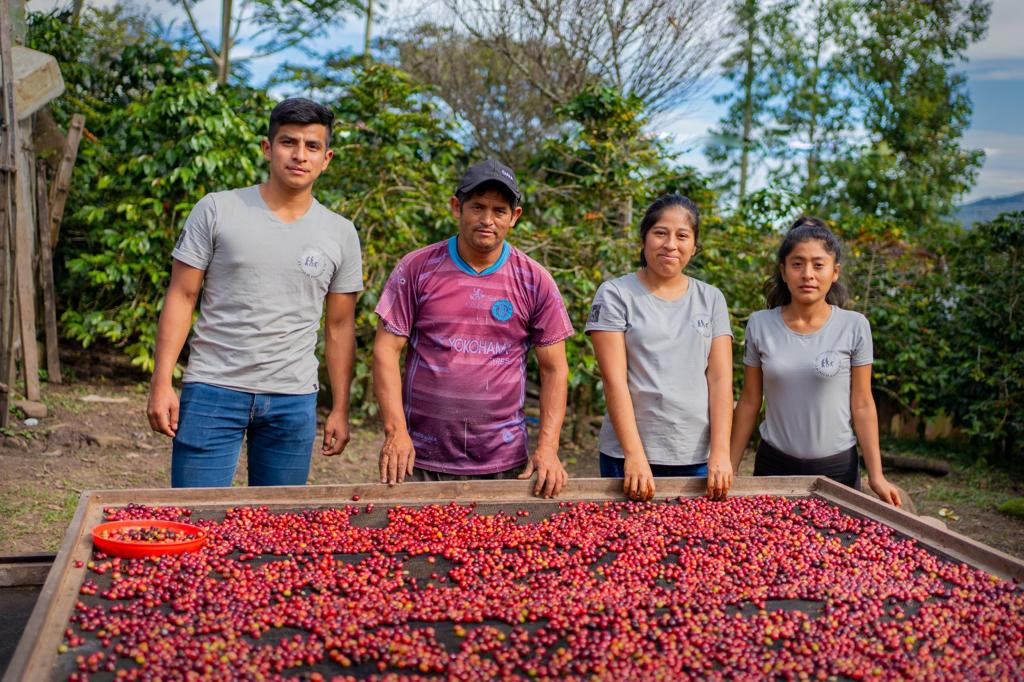
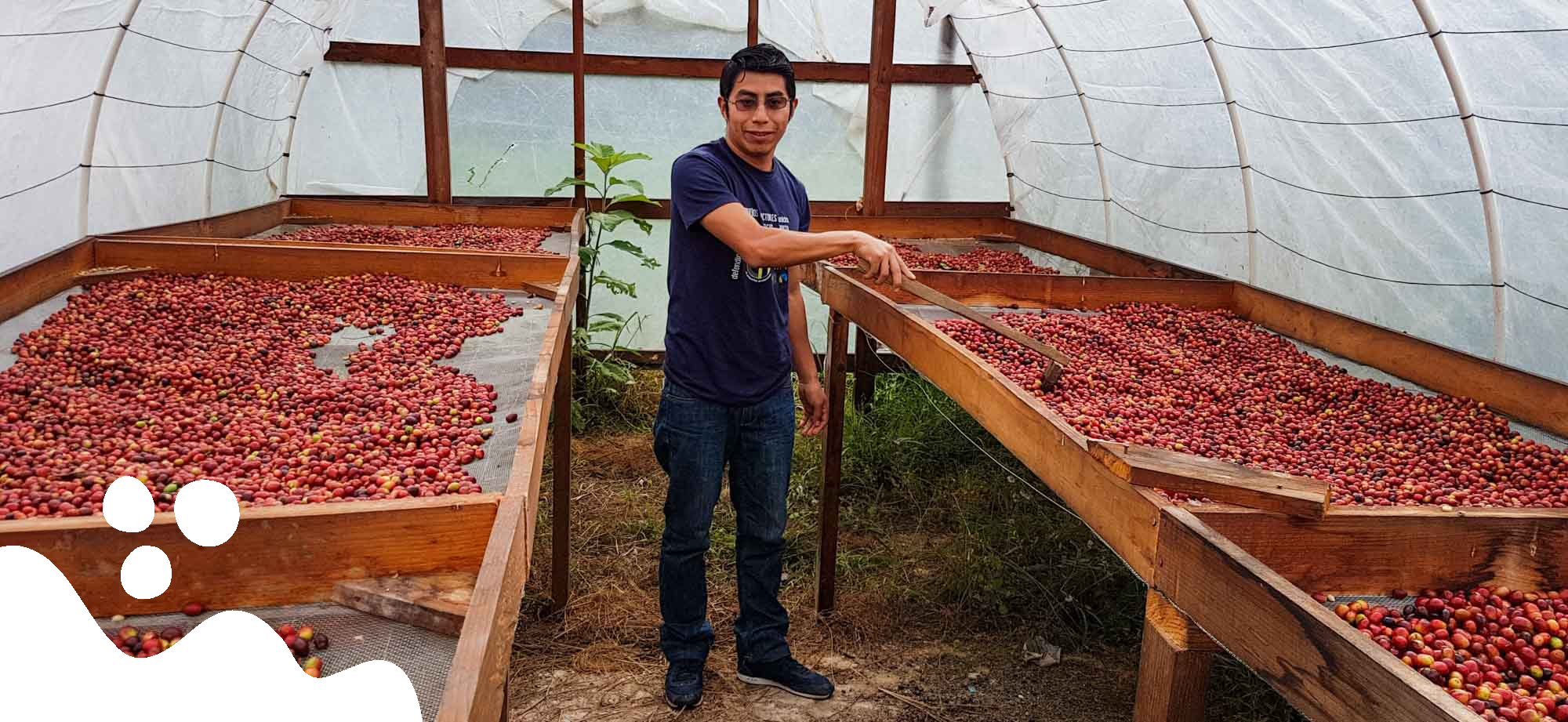
El equipo de control de calidad de Chirinos inicio un programa para capacitar a los productores en la catacion.

Una de las experiencias más ricas que tenemos es la del equipo de Chirinos, conformado por Eber, Miguel e Isela, jóvenes productores y catadores responsables del área de control de calidad, quienes a través de su líder Eber, comenzaron a realizar capacitaciones en cada base, aplicando la metodología desarrollada por Oscar en el Centro de Excelencia, y que ellos rebautizaron con el nombre “APRENDE HACIENDO”, donde se trabaja el desarrollo de los sentidos a través de la experimientación con olores y sabores, probando frutas y especies de la zona, asi como diferentes calidades de cafés. Estos ejercicios, fueron de gran aceptación por los productores, llegando a tener un índice de asistencia del 80%.

En un inicio, comenta Eber, ellos no creían en la catación, ni entendían su importancia, pero hoy día esta experiencia los ha ayudado y motivado a tal extremo que no solo están siendo más cuidadosos en la cosecha y procesos, sino algo más increible, están haciendo investigaciones para determinar cual es la mejor forma y el tiempo más óptimo para la fermentación, haciendo diferentes ejercicios, llegando con sus muestras al laboratorio para que este grupo de jovenes catadores, liderados por Eber, evalue las muestras y sus diferentes procesos, para luego indicar cual fue el proceso que intensificó más favorablemente los atributos de la taza. Este trabajo ha requerido mucha dedicación, pero gracias a estos ejercicios, se ha podido observar que los cafés de las primeras cosechas ya no tienen el frescor y sabores de mani tan marcados que se veía el año pasado.

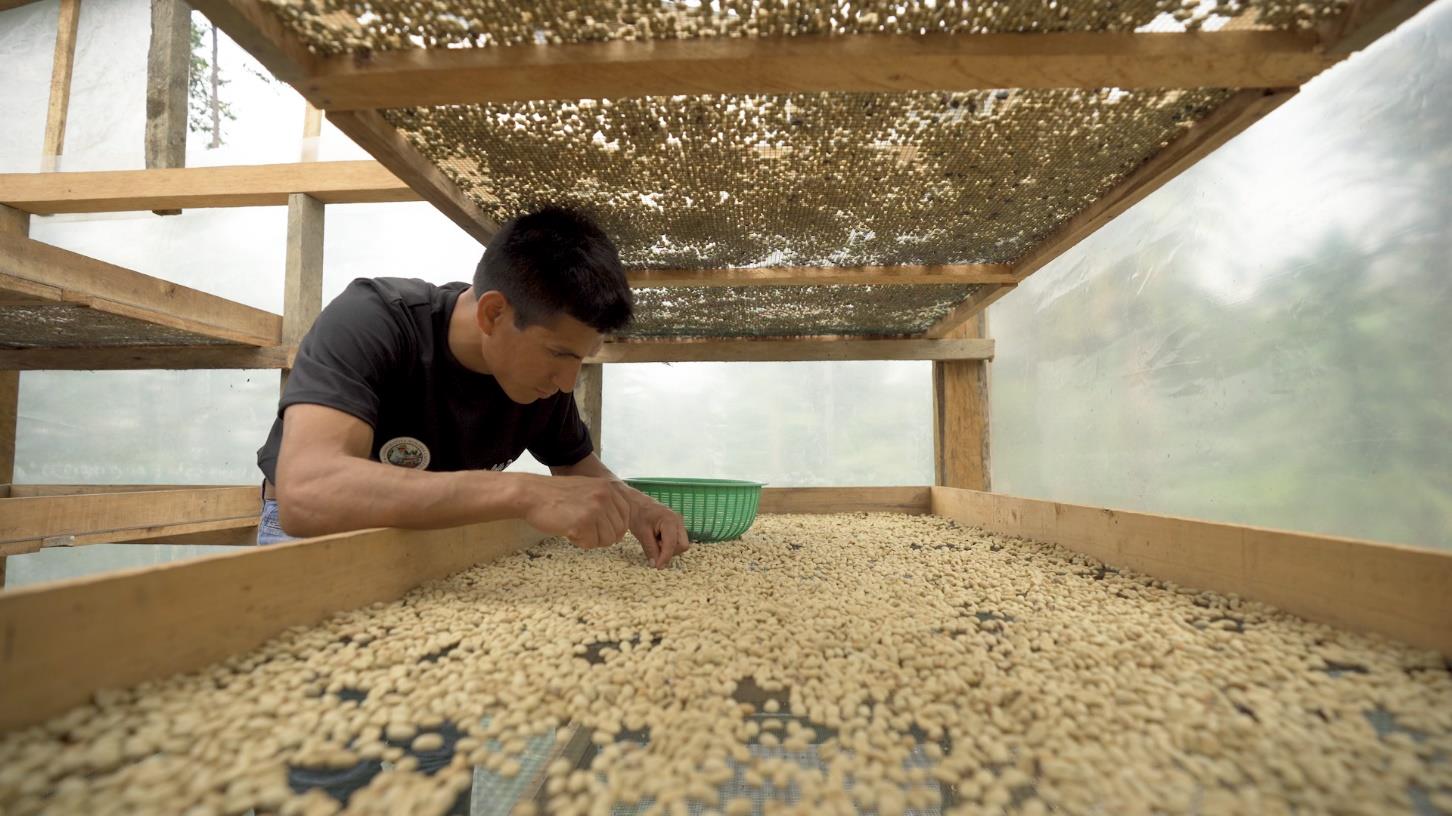
Talleres en finca ayudan a los productores entender cuales procesos de post-cosecha contribuyen a una mejor calidad

Otro gran beneficio que Chirinos ha visto en este proceso de capacitación es la disminución de rechazos de lotes en el centro de acopio, lo que ha originado colectar mayor café de los socios, con puntajes muy interesantes desde el inicio de la cosecha. La capacitación que estos jóvenes han trasmitido a los 370 productores, ha sido una de las más exitosas y de resultados muy rápidos. Ahora los productores llegan a la cooperativa preguntando como salio el resultado de su café en físico y en taza. El grado de participación ha sido increiblemente del 80%, y todos ellos tienen como objetivo lograr el tan ansiado 85 puntos.

Este es solo un ejemplo, de como las capacitaciones trascienden los umbrales de los centros de capacitación, transmitiendo este conocimiento y enseñanza de boca en boca hasta llegar al mismo productor.

- Claudia Aleman, Coordinadora de Relacion Directa, Peru

  • Share/Bookmark

No responses yet

Jul 19 2010

When Training Extends Beyond the Classroom

Last year, Sustainable Harvest started a cupping training program at our Center of Excellence in Peru. Through this program, Sustainable Harvest has trained more than 150 Peruvian cuppers from 25 producer cooperatives. These trainings have been rigorous and now, with the program its second year, we are seeing the measurable impact it has had. We see the results not only in the number of cuppers who we have trained, but also in the numbers of farmers who those cuppers have in turn trained — a peer-to-peer exchange among producers that multiplies the impact of our training.

The Chirinos quality control team started a program to educate co-op members about coffee cupping.

One of the richest experiences we have had is with the Chirinos cooperative cupping team, including Eber, Miguel and Isela (all of them trained at the Center of Excellence).  These young producers and cuppers are responsible for Chirinos’ coffee quality control, which, led by Eber, started a program  to educate and train members of their cooperative in applying the cupping methodology developed by Oscar in the Center of Excellence. They renamed the methodology “learn by doing” because it is experiential, allowing the producers to use their sensory skills to taste and smell the different aromas and flavors of the fruits and spices of the region, as well as having them drink coffees of differing qualities. These exercises have been widely accepted by producers, with an attendance rate of 80% at the training sessions.

In the beginning, Eber says, the producers were reluctant to believe in cupping and its importance for producing high quality coffee, but this experience has helped and motivated them not only to be more careful when harvesting and processing, but–even more incredible– it has encouraged them to do research to determine the best material and optimal fermentation time for their coffee. The Chirinos producers have done different experiments, arriving to the cupping lab with samples and requesting that these young cuppers evaluate the samples and indicate which is the process that best intensifies the attributes of the cup. This work has required a lot of dedication, but thanks to these experiments, we’ve seen an improvement in the quality of the coffees that have arrived since the beginning of the harvest, reducing the green taste and peanut flavor founded in last year’s crop.

On-the-farm cupping training has helped producers tweak processing to create a higher quality cup.

Another great benefit that the Chirinos cooperative has experienced as a result of this training program is a decrease in rejections of the lots of coffee that producers deliver to the collection warehouse. The cooperative has been able to collect more coffee from their members, with exciting scores from the beginning of the harvest. The training that these young people have provided to 370 producers has been one of their most successful workshops, with positive and tangible results. Producers now go to their cooperative asking about the cupping evaluation of their coffees, and they are working very hard to get closer to achieving the expected 85 points.

This is just one example of how all Sustainable Harvest’s training efforts are extending  beyond the classroom or laboratory and impacting producers directly.

- Claudia Aleman, Relationship Coffee Manager, Peru

  • Share/Bookmark

No responses yet

Mar 30 2010

Innocencia’s Guinea Pigs

After several months away on maternity leave, I was really glad to see the familiar faces of co-op managers, presidents, and cuppers at the training event in our office in Lima last week. Everyone had just arrived from their respective homes. To arrive in Lima, they had traveled on average fifteen hours by bus — first over sinuous mountain roads to the coast, and then across the long and monotonous road that crosses the Pacific desert. Among these familiar faces, there was a one that appeared new to me. A humble and slightly shy man, he introduced himself as Jesús, the new president of the Aprocass cooperative.

The first day of the training event started with presentations and discussions on prices, contracts, and quality. Later, we began the process of one-on-one meetings between cooperatives and the roaster representatives at the event. Just before I stepped into the conference room, Jesús, whose meeting was not scheduled until the following day, came over and asked if I would be in the office later that evening. He said his wife had asked him to deliver something to me. I said of course; the meetings were just starting, so I would be at the office for another two hours.

Another twenty minutes passed, and Jesús returned and quietly called me over to him. Timidly, he handed me a small black bag and said, “I have a package for you from my wife, who remembers your visit to our home three years ago very fondly.” And woosh! In that moment, I realized that Jesús was the attentive farmer who welcomed me to his farm and introduced me to his family during a visit three years ago.

Claudia Aleman (foreground) sits down with members of the Aprocass cooperative in Peru

Claudia Aleman (foreground) sits down with members of the Aprocass cooperative in Peru

Quickly, my memory transported me to the small, wooden house with a hammock where Jesus and his wife Inocencia slept with their infant son. It was lunchtime, so they had invited us into their simple dining area, where we sat and watched small animals running at our feet — brown and black guinea pigs. Soon the plates of food arrived, each with two potatoes, onions, and of course, well seasoned guinea pig — el manjar del monte or “delicacy of the mountain” as they are called here in Peru — that families serve on special occasions. I was delighted, and what I remember most from that moment is how delicious the guinea pig was — the best that I had eaten in a long time.

I don’t remember what the expression on my face was in that moment as I devoured the meal or how much I praised the food. Yet when Jesus handed me that small black bag in the Lima office three years later — the gift that his wife Inocencia had packaged carefully for the fifteen hour trip — I knew it was guinea pig, prepared especially for me so that I could relive the pleasure that I felt so long ago at their family’s table.

This moment was really special for me, because I have recently realized how small, simple actions, gestures, or even a simple “thank you” can leave an impression on the lives of people that I meet during my travels in this beautiful world of coffee. I have seen how a simple act will be remembered and appreciated for may years, just as a slight will never be forgotten.

I hope it was not only how much I loved their guinea pig that Inocencia and Jesus remember of my visit, but also the message that I brought years ago. The year following my visit to their home, Sustainable Harvest began working with the small Aprocass cooperative. Even in moments when the cooperative faces big challenges, connections like these keep me motivated to continue supporting the farmers of Aprocass and especially Jesús, who has only recently taken over leadership of the co-op. Surely he was elected by the local farmers to represent them because of his kind way with people and his honest principles.

- Claudia Aleman, Sustainable Harvest/Peru

  • Share/Bookmark

One response so far

Feb 19 2010

New Faces: Peruvian Farmer Dario Roman Tells His Story

Published by wynne under Farmer Training,South America

Dario Ramon became the leader of the APESI coffee cooperative in San Ignacio, Peru through perserverance and dedication

Dario Ramon became the leader of the APESI coffee cooperative in San Ignacio, Peru through perserverance and dedication

About a year ago, Sustainable Harvest’s Oscar Gonzales was teaching men and women in San Ignacio, Peru how to cup coffee to evaluate its quality. Sustainable Harvest had assembled almost thirty cuppers from our suppliers in Peru and Ecuador for three days of intense training. As Oscar began the first day, a middle-aged man he didn’t know entered the room. The man pulled up a plastic chair, and, listening intently, began taking careful notes.

Later that morning, the man, with salt and pepper gray hair and a wide smile, introduced himself as Dario Roman. He asked Oscar if he could stay for the day of training. While there was no extra equipment at the training center, Oscar lent Dario a spoon with which to cup, and Angel from our staff lent him an apron to protect his shirt from splashes of coffee.

On the third day of the training course, Dario and Oscar finally sat down to talk about the coffee that Dario’s cooperative, APESI, produces. Dario wanted Sustainable Harvest’s help to sell his beans, and Oscar wanted to know more about the man who had traveled so far to participate so attentively in the training. Over lunch, Dario told Oscar the story of how he came to be the leader of APESI.

“I come from the mountains of Piura, in the north of Peru. The only thing I knew was farming,” he began. Dario married as a young man, had three children, and farmed to support his family. But things went badly: his land was not producing well and his wife died very young. Lacking an income and grieving for his wife, Dario struggled to raise his three children.

Eventually, Dario married again and moved to the town of San Ignacio, where it is said that anything can grow because of the good climate and healthy soils. There, Dario met farmers who taught him to grow a tuber called yacón. When the harvest came, Dario found he could not sell it because the market was flooded with yacón and competition was fierce. The next season, Dario planted peanuts, maintaining faith that he could succeed in San Ignacio. Dario suffered later that year as he watched a plague of ants eat his peanut crop. He wondered if he was destined to fail, but the obligation he felt to his children and his wife made him push on. Dario was desperate; yet he could not give up because he had to feed his growing family. He chose to believe that something good was just around the corner.

Dario and the APESI cooperative grow their coffee in the fertile hills of San Ignacio, Peru

Dario and the APESI cooperative grow their coffee in the fertile hills of San Ignacio, Peru

Dario had heard other San Ignacio farmers talk about the income they earned from growing coffee. He organized a group of his friends, and they planted coffee on their land. With dedication and effort, they learned to produce a high quality coffee. After Dario’s experience growing a crop he was not able to sell, he led his cooperative in the search for reliable, consistent markets for their coffee. He had heard from other cooperatives in San Ignacio that Sustainable Harvest would be providing a training in coffee quality.

“The training course was an opportunity I could not miss,” Dario told Oscar. He wanted to meet the staff of Sustainable Harvest. And so he arrived at the cupping training course as an eager but unknown student that first day.

One month after first meeting the team from Sustainable Harvest in San Ignacio, Dario visited our office in Lima. He traveled far to discuss the quality of APESI’s coffee and find out about the possibilities to sell APESI’s coffee through Sustainable Harvest this coming year. After cupping APESI’s coffee and witnessing Dario’s determination, Sustainable Harvest will work with APESI this year to help them develop a long-term relationship with a buyer for their coffee.

  • Share/Bookmark

2 responses so far

Feb 12 2010

Climate Change in Latin America

Honey coffee drying at Las Lajas farm

Honey coffee drying at Las Lajas farm

In coffee growing regions throughout the world, the effects of climate change are beginning to threaten farmers’ livelihoods established through generations of hard work. In many countries, producers are taking note and seeking ways to mitigate the worst impacts of climate change.

In Colombia, severe weather over the past few years has resulted in the lowest coffee yield in more than three decades. Warming weather contributed to heavier rainfall during the wet season, causing the growth of leaf rust on coffee plants and worsening beetle infestations. As climate change continues, Colombian coffee farmers are faced with difficult choices in the years ahead: expensive preventative measures may raise coffee prices but switching to hardier varieties can decrease cup quality. The farmers’ decisions will affect the global coffee market.

In Costa Rica, Sustainable Harvest’s supplier partners face similar challenges as a result of climate change. Coffee farmer Minor Corrales, a member of the AFAORCA farmers’ association in Tarrazú, has seen the regular patterns of rain and sun that his father and grandfather relied on for decades replaced by more unpredictable and extreme weather. The region experienced unusually warm weather last December and January, resulting in an earlier harvest as cherries ripened faster than normal. North of San José, the family-owned farm Las Lajas sells a sun-dried honey coffee that is increasingly difficult to produce as periods of sunlight become less predictable and consistent.

Across coffee growing regions of Latin America, the timing of planting, harvest, and drying carefully honed over generations to produce the best yield and quality for each unique micro-climate may no longer be applicable. Although many farmers have so far been able to adapt to minor deviations from normal temperature and rainfall patterns, the increasing pace of such changes will make it more difficult to adjust in the future.

Harvesting shade-grown coffee

Harvesting shade-grown coffee

Sustainable Harvest is working with farmers and other stakeholders to identify ways to reduce the impact of climate change on coffee growing communities. In unforested areas, one possible approach is to plant shade trees over coffee plants to reduce local temperature variations. Both environmental and economic measures are necessary. By establishing transparent market linkages, providing training in quality, and assisting with organic or Fair Trade certifications that bring higher prices, Sustainable Harvest also helps ensure that farmers have the income security to survive a poor harvest. We’re also helping farmers in Central America diversify their farms with special attention to improving their families’ food security. That way, even if the coffee yield is lower in a given year, farmers will still be able to adequately feed their families. Although climate change poses significant challenges to coffee farming communities, we hope to reduce those risks through collaborative efforts to find, introduce, and support innovative approaches in Latin America and worldwide.

  • Share/Bookmark

One response so far

Next »